Life in the Bike Lane
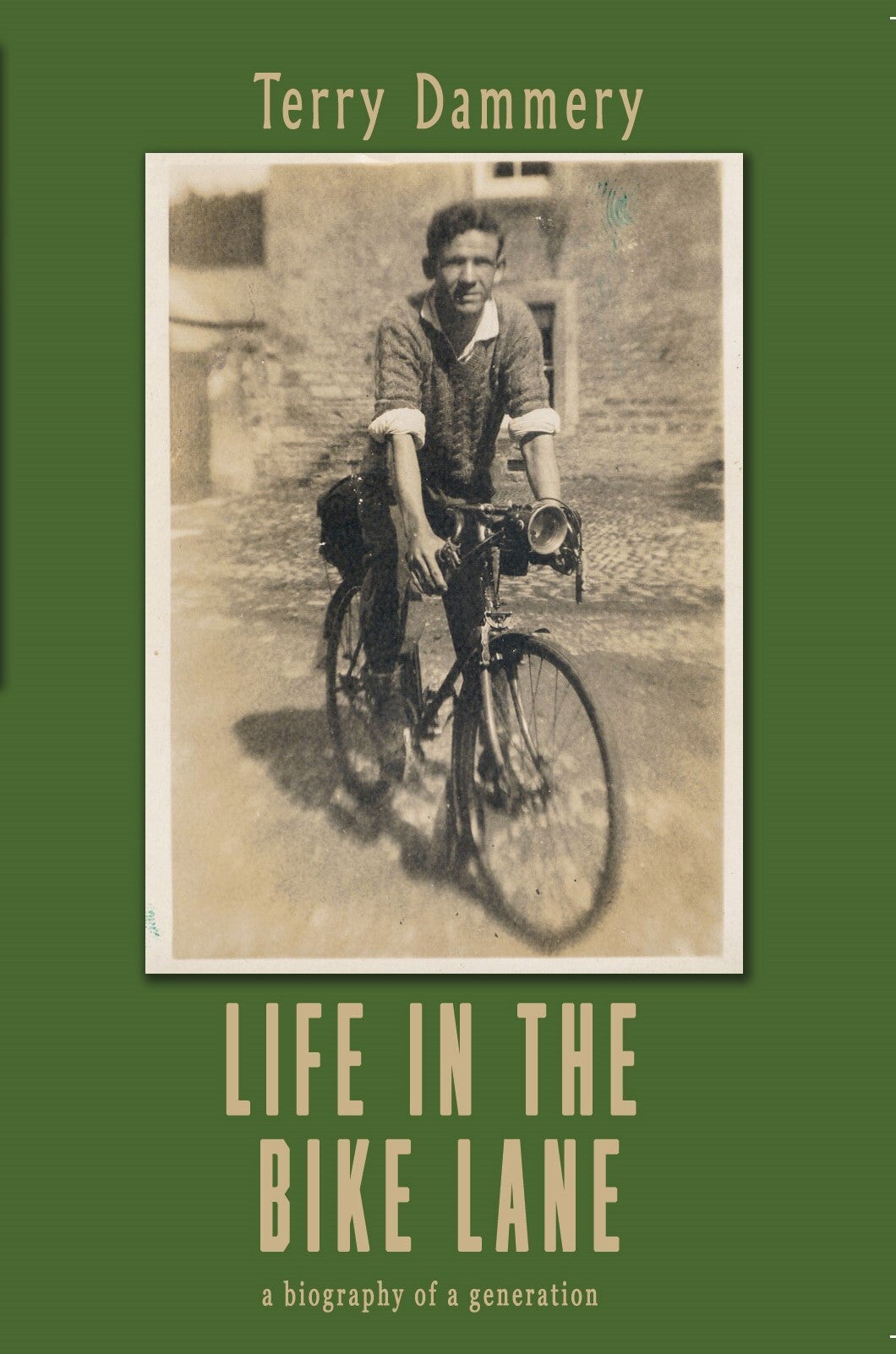
There are no Barons or Earls, no-one rides in a Daimler or drives a Bentley, just folk with their bikes left in the hall. Normal people, kids who inherited the peace, did everyday things and never merited an obituary at the time of their demise.
The second volume of a verse novel trilogy, ‘Life in the Bike Lane’ is a celebration of the ordinary, a small piece of social history – eighty plus years of life told from the bottom up. Written from the perspective of lived experience, its historical fidelity is impeccable. It is the social truth about the spirit, the lived reality of a generation – their innocent and guileless story.
A review
by Austin Quigley Professor Emritus Dean of Literature Columbia University New York City
Having read, with great interest, Terry's book (for the third time), I thought I would share a few thoughts that you might pass on to him.
The idea of a "biography of a generation" is itself ambitious, original, and far from easy to achieve. But he has succeeded remarkably well, not least in finding a compelling umbrella term: life in the bike lane, and in depicting that life through a scrap-book approach of images, echoes, and intermittent generalisations.
I particularly liked the images of a generation climbing out of the bomb shelters as "urchins of war", blinking in the sunlight, and finding that, though happy to be survivors among the ruined buildings and heirs to the peace, we were, nevertheless, "history's waifs in culture's rags". There were still the shadows of a Victorian world whose virtues were not to be cast off just because, having been established before the war, they, like much else of persisting importance, were no longer fashionable. In our own way, "We were still provincial Victorians, war had cut her apron strings, but a century of habit kept decorum and decency alive". Our time, however, was upon us, and change was everywhere: "We were the tortoise catching the hare, finding how ignorance springs from certitude, knowledge maybe from doubt".
I also loved the image of "the caterpillar before the beauty of the bombsite butterfly", and the many ways he earned the little homily that "life really is like riding a bicycle, you pedal or you fall", and the many ways he positioned this generation among those of the past, also traveling "a thousand years of dusty roads".
If we were, indeed, "too young to see the beauty of our ordinary lives", this "biography of a generation" preserves some of that beauty as an archive for the future, as its own compelling version of "a patchwork of cultural clutter".
2nd review, by John Storey
Your ‘biography of a generation’ is thought provoking, stimulating, entertaining and, for me, very moving
That’s because it’s about Me….well mostly….and without the bikes!
In your beautiful accessible poetry I feel so many remembered experiences and others I would rather forget. ‘Gone like a missed train, no light at the end of the tunnel’. I’m sure this is not unique or exclusive The majority of readers will find themselves in your wonderful poem.
Also my memory was challenged and extended (‘we fashion the differences’) your bladderwrack was my rockweed, your Morellis my Pacittos. Philip L’s cycling in search of Mason’s Marks is my Medieval graffiti and wall paintings. Edward T’s willow herb and grasses are now hedges of fund managers on the Cotswold Line…….
I will widely recommend Bike Lane